
Speak to any other learning and development professional, and you’re bound to hear the term ‘personalised learning’ at least a few times. But, what exactly is it? And, can it really improve learning and development outcomes amongst your employees? Keep reading and the Thirst team will answer these questions and more… 👇👇👇
What is personalised learning?
Let’s kick things off with a definition; what exactly is personalised learning? 🤔💭
Reach for your nearest dictionary, and you’ll find personalisation defined as being, ‘the action of designing or producing something to meet someone’s individual requirements’.
Append the word learning to personalisation then, and you have the definition we use here at Thirst…
Personalised learning is the act and process of creating a learning pathway that is tailored to an individual’s development requirements – be that the acquisition of new skills, new knowledge, or even behaviours. 🎯
This personalisation extends not only to the topics presented to the learner, but the formats in which learning content is presented, the learning environment (e.g. you can learn when and where you want), and more. 📖📹
In other words – personalised learning isn’t your old school ‘one size fits all’ style of learning. To borrow a clothing-based analogy, personalised learning is a tailored approach to learning that ‘fits perfectly’ to each individual. 👔😀
The growth of personalisation
Take a step outside your position as a learning and development professional and look at society more broadly for a moment.
Personalisation is everywhere. 🌎
L&D is currently being transformed by personalisation – but so is nearly everything else.
From marketing emails and shopping experiences to streaming and on-demand services, individuals are being offered more personalised experiences.
Why? Because personalisation works! 🤯
As technology has advanced, and it has become easier to collect, manipulate and use data, it has become easier to create personalised experiences. 👨🎨
In fact, personalisation has become so ubiquitous that people – whether they realise it or not – now expect to receive personalised experiences. 🙋♀️
To provide more context, let’s take a look at a tangible example; Netflix.
The majority of users perhaps don’t realise it, but once they’ve been signed up to Netflix for a month or two, the program choices presented to them when they log in are personalised to them – based on their previous viewing habits. 📺
And it works!
Apart from one brief exception, Netflix has reported higher revenues each year for more than a decade (as per the Business of Apps). 📈
With personalisation proving to be so successful, it was only a matter of time before the concept of personalised learning became de rigueur within the L&D space. 🌟
The generation question
The adoption of personalised learning isn’t merely being driven by consumer habits, however.
For businesses and organisations, there’s a major demographic change which is making personalised learning essential. 👶👨💼👴
In many organisations, there are now four different generations working together:
- Baby boomers.
- Gen Xers.
- Millennials.
- Gen Z.
The age of these cohorts spans from mid-70s to early 20s. As you can imagine, these different cohorts have wildly different experiences of the world, spanning from those who remember the pre-internet era, to those who know little else but the internet. 😲😲
From this, it’s easy to reach the conclusion that each cohort will learn differently. As we often say here at Thirst, the old ‘one size fits all’ approach to L&D simply won’t work for today’s workforce. 😩
How is personalised learning being implemented in L&D?
Before we delve into the many benefits of personalised learning – and trust us, there are loads! – we’ll take a look at how personalised learning is being effectively implemented in the learning and development space. 💪
Oh, and take note of the italicised word ‘effectively’ in that previous sentence. As you’re about to see, personalised learning only works if it’s implemented in the right way, with the right tools. 🏆
So, how is personalised learning being implemented?
The rise of skills platforms
The most effective way that personalised learning is being implemented is through what are known as skills platforms. 🔧🔨⚒️
Also known as learning experience platforms, these are AI-driven software platforms that are specifically designed to create a tailored learning experience for each employee.
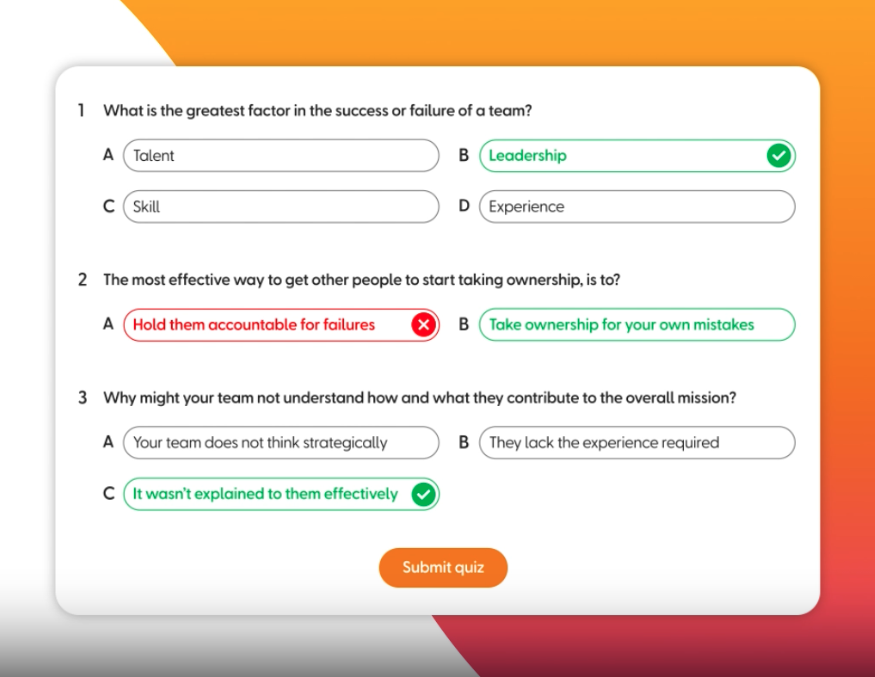
These platforms – like Thirst 👋 – operate on the same fundamental principle as other content-driven platforms like Netflix, using previous content consumption (e.g. watching videos, taking quizzes, reading written content), to suggest new learning content to consume.
This creates a learning experience that is highly relevant to each user; the very definition of personalised! 😎😎
The very best examples of skills platforms not only use AI and personalisation, but also include peer support and social sharing to create a truly powerful learning experience.
Whilst there are other ways that organisations can offer personalised learning experiences to their employees, a skills platform is by far the most effective way of doing so. 👍🙌
Don’t just take our word for it, though. Significant numbers of your L&D peers recognise that implementing personalised learning can be a challenge, and that tech is an effective way to do so.
For example, according to one survey, 36% of L&D professionals felt that ‘adaptive technology was a required investment for effective personalised learning’.
Additionally, 46% of respondents to the same survey felt that establishing effective data analytics and diagnostics was ‘the greatest challenge for making personalised learning work within their organisation’.
What are the benefits of personalised learning?
With the right skills platform in place, implementing personalised learning within your organisation can be straightforward. But, is it worth the investment?
Absolutely! 😀🤩
As you’re about to read, personalised learning can deliver significant benefits, across a whole host of different metrics, to organisations of all kinds.
Improved learning outcomes
First and foremost, personalised learning results in improved learning outcomes for employees. 🏅
This, naturally, has knock-on positive effects for your business. A better educated, knowledgeable and skilled workforce will result in better outcomes for your bottom line.
That’s not empty rhetoric on our behalf. According to a study from the eLearning Guild, personalised learning leads to a 30% improvement in learning outcomes. 📊
Improved retention of knowledge and skills
When learning materials are tailored to an individual, they’re far more likely to remember said materials! 🧠🧠🧠
That’s another of the findings of the study by the eLearning Guild referenced above. The study found that learners who underwent a personalised learning experience demonstrated a 20% improved rate of retention compared to those who did not. 📚
Improved engagement in personal development
With a tailored learning pathway – that doesn’t contain any irrelevant information – a learner is far more likely to be engaged in their learning materials and far more likely to ‘own’ their personal development. 🤝
With personalised learning recommendations, employees feel that their own learning desires are being truly catered to – making them more likely to engage with L&D efforts. It also makes employees more likely to complete learning and training courses.
In fact, as we’ve written previously, 77% of L&D professionals claim that personalised learning is vital for learner engagement. 😎
In other words, personalised learning can make employees more intrinsically motivated to learn! That should be music to every L&D pro out there! 😊
Improved employee performance
Closely related to the above two points is the fact that personalised learning results in improved employee performance. 💪🏋️♀️
“Well, of course it does!” you might say, but by how much? That, after all, is the question that’ll be on the lips of those who control your L&D budget.
As per a report produced by Deloitte, personalised learning can result in a 15 to 20% increase in productivity amongst employees. There’s no denying that that’s a major uplift in employee productivity! 💫💫
Improved inclusivity
Everyone is different. No two people learn in the same way. We all have different wants, needs, and aspirations.
Whichever way you cut it, a ‘one size fits all’ learning approach just isn’t suitable for today’s workplaces. 🫠
If you want to create a truly inclusive environment that caters to everyone, then personalised learning is the perfect way of doing so. 😸
Improved company performance
For the board members and investors in your company – this is what truly counts.
Personalised learning can result in a demonstrable, proven improvement to your organisation’s bottom line. 💸🤑
The question many of you’ll be asking yourself right now is – ‘how much?!’
Well, according to research carried out by market intelligence company the Aberdeen Group, the implementation of personalised learning can result in 12% higher revenue growth, and 10% higher profitability (compared to those companies that didn’t implement personalised learning). 💰🫰💰🫰
Those are some BIG percentages that senior leaders should definitely pay attention to!
Improved employee retention
In this era of ‘the great resignation’, it’s becoming increasingly difficult for organisations to retain their very best talent.
However, personalised learning can play a significant role in holding on to your top performers. 🔓🔒
Consider the following stats from training provider LORMAN:
- 74% of employees feel they aren’t reaching their full potential due to a lack of relevant learning opportunities.
- 41% of employees consider their organisation’s professional development opportunities a very important factor to their job satisfaction.
- 76% of employees say a company is more appealing if it offers additional skills training to its staff.
We could go on… The point is, if you want to improve employee retention within your organisation, the implementation of personalised learning is arguably the most effective way of doing so. 🧑🤝🧑🧑🤝🧑🧑🤝🧑
It’s certainly clear that employees are hungry for high-quality, effective, personalised learning opportunities.
How personalisation will shape the future of L&D
From generational changes to evolving consumption habits, personalisation is no longer optional, but essential.
However, with the rise of personalisation comes some big changes to the future of L&D.
Rethinking the L&D department
The learning and development department of old generally took a top-down, course-driven and highly-directed approach to employee learning. 🤔💡
In many instances, employees would be told what training courses they needed to take, when they needed to take them and would be told the training materials they would have to read and learn.
Personalisation completely changes this – placing much more power in the hands of employees themselves. 🤓📚
L&D departments will need to rethink how they structure their training and assessment efforts and how they can better accommodate personalised approaches to learning.
From creators to curators
Okay, so you’ve just introduced a new skills platform that allows for personalised learning.
Can you now go and put your feet up? Not at all?!
Whilst personalised learning changes the role of L&D pros, it absolutely doesn’t eliminate them.
With personalised learning and skills platforms, L&D professionals will move from being creators of content to curators of content. 🎨👩🎨
It’s up to L&D departments to populate skills platforms with the types of content that will create personalised learning experiences. Fail to do this and employees can be faced with information overload – which can happen if skills platforms are left to become a free-for-all without carefully chosen and curated content. 😵💫😵💫
Less bureaucracy!
Back in the day, L&D involved a considerable amount of paperwork. L&D managers would have to fulfil out performance plans, mark and evaluate assessments, create training courses and more. 📝📎📤
Today, with personalised learning and skills platforms, L&D platforms are free to move away from bureaucratic tasks and into more creative ones, creating and curating content that’ll deliver the very best learning experience for employees.
In short, L&D pros will be able to become a much closer part of the workforce – and being able to demonstrate tangible results – become a strategically important part of a business. 🏆
Changing L&D ‘consumption’
Traditionally, learning and development efforts took place at dedicated times of the day/week. 🕒⏳
Employees would troop down to the ‘L&D suite’ and undertake training.
With personalised learning and an effective skills platform, employees can learn as and when they want to. They can set their own ‘pace’ when it comes to learning, doing so outside work hours or in and around their workflow. ⏩⏩
As a result, L&D professionals won’t necessarily continue to run training courses. Instead, they’ll respond to employee requests for new learning content and ensure it is curated and carefully added to the skills platform.
Thirst: the skills platform that puts personalisation first
Thirst is the AI-driven personalised learning platform that allows L&D pros like you to create truly powerful, highly-tailored learning experiences for employees.
We take the learning experience to a new level of individuality, using powerful machine learning to create immersive, deep learning experiences. 👇👇👇
Try Thirst for free now and see how it can transform your organisation
For more e-learning news, advice and information, read the Thirst blog…
7 Trends That Will Shape Learning and Development in 2023: What L&D Professionals Need to Know | 7 Ways AI Will Change the Future of L&D in 2023 | 7 Ways to Identify Knowledge & Skills Gaps in Your Workforce